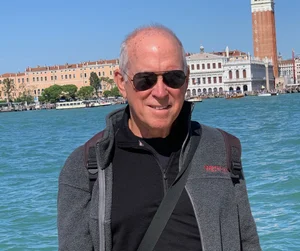
2021 - San Pancho I Found - Julia OBrien
The first time I went to San Pancho, it felt like discovery. Not the dramatic kind, but something quieter—like stumbling into a place that didn’t need to announce itself. The streets were unhurried, the people open, and the rhythm of daily life seemed to exist outside of whatever urgency I had brought with me. It didn’t take long before I knew I would come back.
And I did. What started as a visit slowly became a pattern. Then a habit. Over time, I stopped feeling like a tourist and began to recognize the small details that make a place familiar—the same morning coffee spots, the same faces passing by, the sense of knowing where the day might lead without planning it. San Pancho became something I returned to, not just geographically, but mentally.
Then COVID changed everything.
When I arrived during the winter of 2021, the town felt different immediately. It was quieter, but not empty. There were far fewer Americans than I had seen before. Instead, there were Canadians—more than usual, it seemed—many of whom had chosen to stay longer, riding out the uncertainty of the pandemic far from home.
I was there alone, newly retired, spending three months in San Pancho. The solitude wasn’t entirely uncomfortable, but it made me more aware of the people around me. Conversations started easily, as they tend to do in places like that, especially when everyone is, in some way, displaced.
It didn’t take long to notice a pattern in those conversations.
Many of the Canadians I met shared similar beliefs about COVID—beliefs that felt far removed from the mainstream information I had been exposed to. There was deep skepticism about vaccines, often framed in absolute terms. “Anti-jabbing,” some called it, with a kind of casual certainty. Discussions would drift into conspiracy—claims that Justin Trudeau was the son of Fidel Castro, or that the pandemic itself was something manufactured and manipulated.
What struck me most wasn’t just the content of these ideas, but their source. Again and again, people referenced Facebook as their primary, sometimes only, source of information. Traditional news outlets were dismissed outright, labeled as untrustworthy or controlled. There was a closed loop to it—information reinforcing itself, rarely challenged.
It created a strange dynamic. On the surface, everything was relaxed: dinners, beach walks, casual conversations under the sun. But underneath, there was a current of tension—not overt conflict, but a sense that people were living in entirely different versions of reality, side by side.
By 2022, things shifted again.
More Americans began returning to San Pancho, and the balance of who was there changed. Fewer Canadians, likely due to restrictions back home, and a different energy began to settle in. The town felt busier, closer to what it had been before—but not entirely the same.
The visible signs of COVID precautions were inconsistent, almost symbolic. Some places had mats at their entrances with liquid meant to sanitize your shoes, a ritual that people performed without much thought. Masks were rare. If anything, there was a sense that concern had faded—not necessarily because the risk was gone, but because people had decided, individually or collectively, to move past it.
Looking back, what stays with me most is not just how San Pancho changed, but how people did.
In a small town, during a global crisis, differences in belief become harder to ignore. There’s no distance from them. You hear them over coffee, at dinner, walking down the street. And yet, life continues alongside those differences—meals are shared, conversations happen, connections form, even when the foundations underneath them don’t quite align.
San Pancho didn’t just reflect the pandemic. It revealed it—through people, through perspective, and through the quiet, everyday moments where those things surfaced.
And for me, being there alone, retired, with time to notice all of it, made those contrasts impossible to forget.
Key Insights
* I tend to notice patterns in people and conversations, not just what’s happening on the surface, but what’s underneath it.
* This experience made me more aware of how differently people can see the same situation—and how those differences show up in everyday life
* Being in San Pancho during that time, especially on my own and newly retired, gave me the space to really observe and reflect.
* I found myself comfortable sitting with both connection and disagreement at the same time.
* Looking back, what stays with me most is how a small place can reflect much bigger global dynamics in a very personal way.